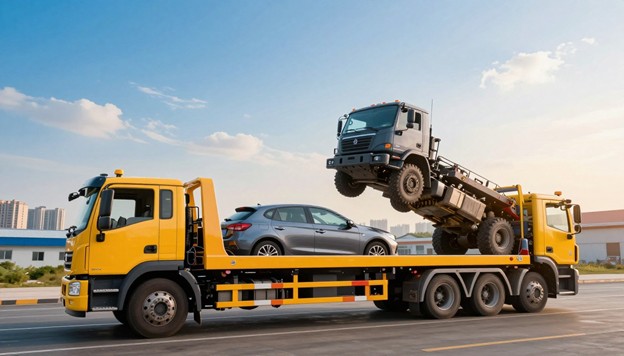
This guide is for fleet managers, tow operators, and car owners. It helps them choose between light, medium, or heavy towing. We cover towing costs, vehicle types, and rules so you can make an informed choice.
The article talks about technical limits like GVWR and GCWR. It also mentions common towing equipment and examples from Ford, RAM, and Chevrolet. Miller Industries and major upfitters are also mentioned. We’ll look at how towing affects your choices.
Expect a detailed guide on choosing between light and heavy duty tow trucks. We’ll discuss how to estimate costs and what licenses you need. This is all to ensure safe and legal towing in the U.S.
Key Takeaways
- Light vs Heavy Duty Towing differs by GVWR, typical loads, and operational demands.
- Towing costs depend on truck class, equipment, fuel, insurance, and maintenance.
- Light duty tow trucks suit cars, SUVs, and 1500/2500-class pickups; heavy units handle RVs, buses, and semi-trailers.
- Regulatory requirements include CDL, endorsements, and DOT inspections for heavier tows.
- Manufacturer data from Ford, RAM, Chevrolet, and Miller Industries informs capacity and upfit choices.
Understanding Light vs Heavy Duty Towing
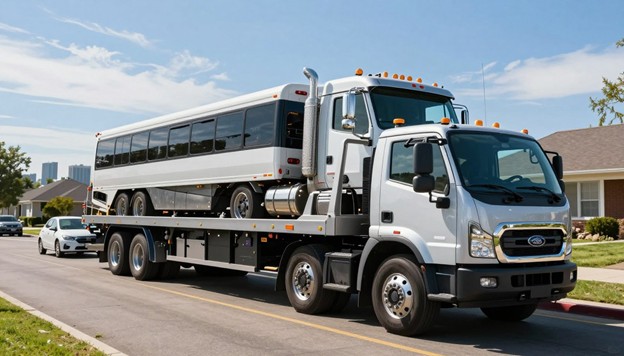
Towing services are divided into light and heavy duty categories. These categories depend on the vehicle’s weight and the complexity of the job. This section explains the differences between these two types of towing. It also talks about the equipment and crew needed for each.
Definition of light-duty towing and typical use cases
Light-duty towing includes cars, small SUVs, motorcycles, and light trailers. These jobs use Class 1–3 chassis with a GVWR up to 10,000 lbs. Tasks include jump starts, moving cars to dealerships, clearing accidents, and small impounds.
These units are fast, easy to maneuver, and cost less to operate. They use flatbeds, rollback trucks, and wheel-lift systems for most jobs.
Definition of heavy-duty towing and typical use cases
Heavy duty towing deals with big rigs, buses, large RVs, and construction equipment. These jobs need Class 7–8 chassis with a GVWR of 26,001 lbs and up. They use integrated wreckers, high-capacity winches, and hydraulic booms for big jobs.
These big jobs need more people, special training, and strong systems to move heavy loads safely.
Quick comparison: capabilities, common tows, and operational differences
Light-duty towing can handle 3,000–10,000 lbs. Heavy-duty towing can handle 20,000–80,000+ lbs, depending on the equipment. Medium-duty vehicles, Class 4–6, can handle box trucks and large vans.
There are big differences in how these jobs are done. Light-duty jobs often need just one person. Heavy-duty jobs need many trained people and special licenses.
Equipment also varies. Light-duty units focus on fast response with flatbeds. Heavy-duty units need strong winches, stabilizers, and hydraulic booms for big jobs.
What is considered light-duty towing?
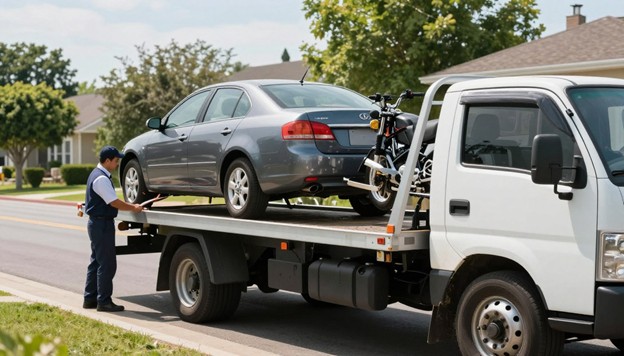
Light-duty towing is for moving cars and small trucks around. It uses small units that can fit in city streets and parking lots. This type of towing is safe and efficient for passenger vehicles, without the need for heavy equipment.
Vehicle classes and GVWR for light duty
Light-duty towing usually involves Class 1 and Class 2 vehicles. Class 1 has a GVWR up to 6,000 lbs. Class 2 goes from 6,001 to 10,000 lbs. Some say Class 3 is also light-duty, but GVWR is the key.
Examples: passenger cars, SUVs, and light trucks
Examples of vehicles for light-duty towing include the Honda Civic and Toyota Camry. Small SUVs like the Ford Escape and light pickups like the Ford F-150 are also common.
Is a 2500 considered a light-duty truck? Trucks named 2500, like the Ram 2500, are often in a gray area. They might be considered heavy light-duty or light-medium duty, depending on their GVWR.
Common equipment: flatbeds, wheel-lift, and rollback features
Light-duty tow trucks often have flatbeds or rollback units. They also use wheel-lift rigs for quick tows. Brands like Miller Industries and Jerr-Dan make these units with remote controls and electric winches.
Tow crews use straps, nets, and hooks to secure loads. They check these items to avoid overloading. This helps keep the vehicle safe during transport.
| Item | Typical GVWR Range | Common Examples | Usual Equipment |
| Class 1 | Up to 6,000 lbs | Subcompact cars, small sedans | Rollback, basic wheel-lift, light winch |
| Class 2 | 6,001 – 10,000 lbs | SUVs, crossovers, full-size sedans, F-150 | Hydraulic flatbed, remote controls, stronger winch |
| Class 3 (light-medium) | 10,001 – 14,000 lbs | Heavy pickups, some commercial vans | Reinforced rollback, heavier wheel-lift options |
| 2500-series models | Varies by GVWR | Ram 2500, Ford F-250, Chevy Silverado 2500 | May require medium-duty upfits depending on GVWR |
What is considered heavy-duty towing?
Heavy-duty towing is about moving the biggest vehicles and equipment on the road. It involves Class 7 and Class 8 rigs, built for extreme loads. These trucks use special chassis, strong winches, and skilled teams for safe transport.
Heavy-duty GVWR thresholds and chassis types
Weight classes guide what equipment to use. Class 7 rigs have a GVWR of 26,001–33,000 lbs. Class 8 rigs are even bigger, over 33,000 lbs, and include heavy wreckers.
Brands like Freightliner, Peterbilt, Kenworth, and International make these heavy-duty frames. They’re designed to handle heavy towing, with strong axles, brakes, and suspensions.
Examples: semi-trailers, buses, RVs, construction equipment
Examples of heavy-duty tows include loaded semi-trailers and buses. Even RVs and construction machines like bulldozers need heavy recovery. It’s important to match the towing capacity to the vehicle’s weight to avoid damage.
Specialized gear: integrated wreckers, towing booms, and hydraulic systems
Wreckers from Miller Industries and others have booms and hydraulic systems. They come in different setups, like single-axle or 5-axle units. Outriggers and stabilizers help lift and control the load.
Winches can lift thousands of pounds. Remote controls and earth anchors help with tough recoveries. Skilled teams use special techniques to lift and move safely.
When planning a tow, operators consider the vehicle’s weight, the terrain, and traffic. They might need to close lanes for big recoveries.
When buying a tow truck, people look at the lifting capacity and the brand. A heavy-duty tow truck is strong enough for the toughest jobs.
What is the difference between light-duty and heavy-duty towing
Knowing the difference between light and heavy towing is key for fleet managers and vehicle owners. This section explains towing capacity, gross combined weight, and more in simple terms. You can use this info when planning a tow or buying equipment.
Comparing towing capacity and gross combined weight
Light-duty tow trucks can handle up to 10,000 lbs. Heavy-duty systems can manage much more, up to 80,000 lbs for big commercial jobs.
The Gross Combined Weight Rating (GCWR) is the max weight of a vehicle, trailer, and payload. It’s set by the manufacturer and is the legal limit. When comparing different models, you can see which ones fit your needs.
Vehicle design: frame strength, axles, and braking systems
Light-duty trucks have lighter frames and drivetrains. They use hydraulic brakes and standard suspensions. These are good for cars, SUVs, and small trucks.
Heavy-duty trucks have stronger frames, high-rated axles, and heavy-duty suspension. They also have bigger braking systems. Class 7–8 units often use air brakes and have cooling systems for towing heavy loads.
Operational demands: licensing, crew, and safety protocols
Licensing varies by weight class. Non-CDL operators can do many light-duty jobs. But, heavy-duty jobs need a commercial driver’s license and special endorsements.
For light-duty, one operator can handle many jobs. But, heavy-duty jobs often need two or more trained technicians. They handle rigging, winching, and load transfers.
Scene safety is crucial. It includes traffic control, personal protective equipment, and rescue plans for rollovers. Heavy recoveries also need paperwork and special training in safe rigging and load transfers.
| Feature | Light-Duty | Heavy-Duty |
| Towing capacity comparison | Up to ~10,000 lbs typical | Tens of thousands to 80,000+ lbs |
| Relevant rating | Vehicle towing capacity, GVWR | Gross combined weight (GCWR), GVWR, GCW limits |
| Frame and axles | Lighter frames, lower-rated axles | Reinforced frames, high-capacity axles |
| Braking system | Hydraulic brakes | Large hydraulic or air brakes |
| Typical crew | Single operator | Two or more trained technicians |
| Licensing | Often no CDL required | CDL and endorsements commonly required |
| Safety and training | Basic traffic control and PPE | Advanced rigging, winching, load transfer, rescue procedures |
| Paperwork | Minimal service logs | Incident reports, weight tickets, permits |
Costs: light duty tow truck price vs heavy duty tow truck price
Buying a tow truck depends on your needs, budget, and future costs. Fleet buyers look at the initial cost and ongoing expenses like fuel, maintenance, insurance, and resale value. Independent operators often search for light duty tow truck for sale listings to balance upfront cost and quick ROI.
Purchase price ranges for light-duty trucks
Used flatbeds and wheel-lift light-duty units usually cost between $15,000 and $60,000, based on age and condition. New rollback upfits on Ford F-350/F-450 or Chevrolet 3500/4500 chassis cost $50,000 to $90,000, including the upfit. Commercial upfitters like Miller Industries and Jerr-Dan charge differently than franchised dealers, so prices vary by region and spec.
Purchase price ranges for heavy-duty trucks
New heavy recovery rigs built on Class 7–8 chassis can cost $150,000 to $350,000 or more. Fully equipped rotators and integrated wreckers can cost over $400,000 with winch capacity, boom ratings, and specialty tooling. Used heavy wreckers cost between $60,000 and $250,000, depending on hours, maintenance history, and hydraulic system condition.
Operating costs: fuel, maintenance, insurance, depreciation
Fuel is a big expense. Heavy diesel Class 8 units use a lot more fuel per mile than light-duty trucks. Expect higher fuel costs, especially in cities with idling and winching.
Insurance and warranty costs also increase with vehicle weight and exposure. Heavy-duty tow truck cost for premiums can be several times that of a light unit due to higher liability and replacement values. Depreciation on highly specialized heavy equipment tends to accelerate once models age or regulations change.
Financing and total cost of ownership matter for fleet choice. Lenders may offer different terms for light duty tow truck price versus heavy duty tow truck price. When planning purchases, include certification, DOT inspections, and periodic safety testing in operating budgets.
Quick comparison table
| Category | Light-Duty Typical | Heavy-Duty Typical |
| New purchase range | $50,000–$90,000 (upfit on F-350/450) | $150,000–$350,000+ (Class 7–8) |
| Used market | $15,000–$60,000 | $60,000–$250,000 |
| Fuel | Lower mpg, gasoline or diesel | Significantly higher diesel consumption |
| Maintenance | Routine chassis and winch service | Hydraulics, heavy tires, winch rebuilds |
| Insurance & depreciation | Moderate premiums, steadier resale | Higher premiums, faster depreciation for specialized units |
Choosing between a light duty tow truck for sale and a heavy unit requires matching capability to work scope. Estimate fuel per mile, schedule preventive maintenance, and compare financing to understand long-term burden. That approach keeps acquisition aligned with operational reality and avoids surprises in heavy duty tow truck cost or light duty tow truck price down the road.
Light duty towing certification and regulatory requirements
Those who tow cars and small trucks must follow federal and state rules. Many have a Class D license, but some need a higher one for heavier vehicles. Knowing what’s considered light towing helps avoid fines and coverage gaps.
States differ on when a commercial license is needed. You might need a commercial driver’s license or an endorsement for heavy trailers. Even with a Class D license, employers often ask for training proof.
State-level certifications and training programs
Groups like the Towing and Recovery Association of America offer courses. They teach safe recovery and vehicle stabilization. NHTSA suggests training for roadside safety. Community colleges and technical schools also offer short programs for light duty towing certification.
Insurance and liability considerations for light-duty operators
Insurance for towing must cover commercial autos and garage liability. Premiums depend on vehicle value, driving record, and work type. Clear contracts and load manifests help avoid disputes. They protect both the operator and the customer.
| Item | Typical Requirement | Why it matters |
| Driver credential | Class D or state CDL endorsement | Determines legal eligibility for light-duty towing operations |
| Training | Industry courses or community college certificate | Improves safety and supports light duty towing certification claims |
| Insurance | Commercial auto, garage liability, cargo | Covers vehicle damage, customer property, and bodily injury |
| Operational documents | Written contracts, manifests, proof of inspection | Reduces liability and clarifies scope of service |
| State permits | Special permits or endorsements for heavier trailers | Ensures compliance when towing approaches upper light-duty limits |
Heavy duty towing regulations and operator qualifications
Operators in heavy recovery must meet strict standards for safe, legal work. Rules cover driver credentials, vehicle condition, inspections, and moves that need special routing. Firms that ignore these regulations can face fines, impoundment, and liability for damages.
Commercial driver’s license and endorsements
Most heavy recoveries require a Class B or Class A license. Choose Class A when towing combination units where the trailer or towed weight pushes gross combined weight rating above state thresholds. Class B applies for single-unit trucks with high GVWR that do not form a combination vehicle.
Specific endorsements may be needed for certain jobs. Examples include tank vehicle endorsements for hauling fuel and double/triple endorsements for multi-trailer moves. Agencies such as the Federal Motor Carrier Safety Administration influence state requirements for CDL for towing operations.
Safety standards, inspections, and DOT compliance
Heavy duty tow trucks fall under FMCSA rules and state DOT oversight. Drivers must complete pre-trip inspections and keep maintenance logs. Records should show brake checks, chassis inspections, and routine service.
DOT compliance extends to hours-of-service limits when crews respond to commercial calls. Accurate logbooks, electronic logging devices, and documented repairs help demonstrate compliance during roadside or facility audits.
Special permits for oversized or overweight loads
When loads exceed legal width, height, or weight limits, operators must obtain special permits oversized loads from the issuing state. Permit requirements vary by route and time of day. Some states restrict night travel or weekend movements for wide loads.
Permits often require route surveys, axle-weight plans, and sometimes pilot vehicles. For critical recoveries that affect highways, coordination with state DOT for temporary lane closures or traffic control may be necessary. Securement methods must meet federal and state statutes to prevent shifting during transit.
Vehicle options: light duty tow trucks, medium duty towing, and heavy duty tow trucks
Choosing the right tow vehicle depends on the load, route, and how often you use it. Light duty tow trucks are best for picking up cars and light pickups. For bigger jobs like vans and heavier repossessions, medium duty towing is better. Heavy duty trucks handle the biggest jobs, like loaded semis and buses.
Overview of light duty tow truck models and configurations
Light duty tow trucks often come as rollback/flatbed upfits on Ford F-350 and F-450 chassis or Ram 3500 conversions. Wheel-lift trucks are also popular for quick, local moves. You can choose between aluminum or steel decks and electric or hydraulic winches, based on what you need.
Companies like Miller Industries and Jerr‑Dan make many factory bodies and parts. Local upfitters then add custom features to fit your needs.
Medium-duty options: when to choose medium over light or heavy
Medium-duty trucks range from Class 4–6, like the Ford F-550, Ram 4500/5500, and Chevrolet 5500. They have longer beds and higher GVWR than light-duty trucks.
Choose medium duty towing for more payload and strength but without the cost of heavy-duty trucks. It’s great for municipal fleets, rental-company repossessions, and light commercial recoveries.
Heavy duty tow truck types and capabilities
Heavy duty tow trucks include integrated wreckers, heavy rotators, and specialized tow tractors. They have strong winches, long booms, and advanced systems for safe heavy lifts.
Integrated wreckers and rotators are best for loaded trailers and off-road recoveries. Heavy rollback tractors are ideal for long-distance hauling of damaged semis in urban or regional areas.
| Category | Typical Chassis / Models | Key Features | Best Use Cases |
| Light duty | Ford F-350, Ford F-450, Ram 3500 | Rollback/flatbed, wheel-lift, aluminum or steel decks, electric/hydraulic winches | Cars, SUVs, light pickups, short local tows |
| Medium duty | Ford F-550, Ram 4500/5500, Chevrolet 5500 | Larger bed lengths, higher GVWR, reinforced frames, heavier winches | Vans, small box trucks, municipal and rental fleet recoveries |
| Heavy duty | Integrated wreckers, heavy rotators, heavy rollback tractors | Multi-ton winches, 360° booms, hydraulic stabilization, heavy-duty frames | Tractors, loaded trailers, buses, large equipment recovery |
Weights and capacities: how much does a tow truck weigh in tons
Knowing curb weight and payload is key for safe and legal towing. Light-duty trucks weigh between 5,000 and 10,000 lbs, or 2.5–5 tons. Medium-duty trucks weigh 10,000 to 20,000 lbs, or 5–10 tons. Heavy-duty trucks can weigh 30,000–60,000+ lbs, or 15–30+ tons.
Flatbeds change how you calculate payload. Steel decks make the truck heavier but reduce payload. Aluminum decks make the truck lighter, allowing for heavier loads. Always remember, payload is GVWR minus curb weight. Exceeding limits can damage equipment and lead to fines.
Typical curb weights and practical payloads
| Tow Truck Class | Curb Weight (lbs) | Approx. Tons | Notes on Payload |
| Light-duty rollback/flatbed | 5,000–11,000 | 2.5–5.5 | Good for most cars and small trucks; watch GVWR when upfitting |
| Medium-duty (Class 5–6) | 10,000–20,000 | 5–10 | Ideal for vans, larger SUVs, and light commercial equipment |
| Heavy-duty (Class 7–8) | 30,000–60,000+ | 15–30+ | Built for semi-trailers, buses, and heavy machinery |
Knowing a light-duty tow truck’s weight is crucial for licensing and routes. Drivers might need a commercial license if the GVWR is too high. Weight affects fuel use and which roads you can take. For example, a Ford F-350 rollback can weigh 9,000–11,000 lbs. This limits how much you can tow, so always check the total weight before towing.
When asking about a tow truck’s weight, remember it’s a range. Always check the manufacturer’s specs when comparing models. Focus on curb weight, GVWR, and axle ratings for safe and legal towing.
When to choose a flatbed tow truck versus a heavy duty tow truck
Choosing the right tow truck is key to safety. Flatbeds are best for cars, light trucks, and AWD vehicles. They carry the vehicle off the road. Heavy duty units are needed for heavy, large, or damaged vehicles.
Benefits of flatbed towing for cars and light trucks
Flatbed towing supports the vehicle fully, preventing damage. It’s great for long trips, totaled cars, and AWD systems. Tow truck weight and payload are important when choosing a flatbed.
Situations requiring heavy-duty integrated wreckers
Heavy duty wreckers are for big accidents, overturned semis, and heavy trailers. They have strong winches, booms, and stabilizers. Emergency teams prefer them for big recoveries.
Cost and logistical trade-offs between flatbed and heavy-duty units
Flatbeds are cheaper to buy and run. They’re quick for car tows and save fuel. But, they can’t handle big jobs. Heavy duty units are needed for heavy lifting and complex recoveries, despite higher costs.
Decisions are based on response time, permits, and equipment. A flatbed works for vehicles within weight limits on clear routes. For big accidents or heavy loads, heavy duty wreckers are safer and avoid damage.
| Factor | Flatbed | Heavy Duty Integrated Wrecker |
| Best use | Cars, light trucks, long-distance moves | Overturned semis, loaded trailers, heavy construction equipment |
| Typical cost | Lower purchase and operating costs | Higher purchase price, greater fuel and maintenance |
| Recovery capability | Limited to GVWR and flatbed tow truck weight limits | High-capacity winches, booms, axle lifts |
| Safety for damaged vehicles | Excellent for totaled or AWD vehicles | Essential when structural damage or load instability exists |
| Permits & logistics | Fewer permits for standard loads | May require special permits and escorts for oversized loads |
| When to dispatch | Routine removals and transport of drivable or towable cars | Complex recoveries; choose heavy duty tow truck for large commercial failures |
Common questions about classifications and examples
Many readers ask about truck classes and towing limits. The answers depend on GVWR, axle ratings, and manufacturer specs. Below are brief explanations with real models and common scenarios.
Model badges like RAM 2500 or Ford F-250 show historical payload levels, not legal class. To see if a 2500 is light-duty, check the GVWR sticker. Many 2500-series trucks have GVWRs from 8,600–10,000+ lbs. This puts some in the light-duty or medium-duty range.
What weight is considered light-duty?
Industry calls vehicles with GVWR under 10,000 lbs light-duty. This includes Class 1–3 pickups, SUVs, and vans. For commercial work, it can go up to 14,000 lbs. Towing rules depend on GVWR and axle ratings, not just the model name.
What is considered light towing?
Light towing means moving loads up to 10,000 lbs. It usually involves noncommercial vehicles. Examples include towing a sedan, small SUV, or light trailer. Light towing jobs often use flatbeds or small rollback units and don’t need special permits.
Below is a compact comparison to help decide which label fits a vehicle or job.
| Category | Typical GVWR Range | Common Examples | Operational Notes |
| Light-duty tow | Up to ~10,000 lbs | Sedan, compact SUV, small utility trailer | Single operator, flatbed or wheel-lift, no special permits |
| 2500-series (varies) | Often 8,600–10,000+ lbs | RAM 2500, Ford F-250, Chevrolet Silverado 2500 | May straddle light and medium categories; check GVWR label |
| Light commercial stretch | 10,001–14,000 lbs | Heavier cutaway vans, small box trucks | Some fleets treat this as heavy for permitting; axle ratings matter |
Use the owner’s manual, the door jamb GVWR sticker, and tow charts from Ford, Ram, or Chevrolet to confirm limits. This way, you can tell if a 2500 is light-duty, what weight is considered light-duty, and what is considered light towing.
Choosing between light vs heavy duty towing for your needs
Match the tow to the load. Check the GVWR, curb weight, and trailer tongue weight. See if the vehicle can move on its own. For commercial rigs, calculate the GCWR and read the chassis plate ratings.
Assess the vehicle or equipment you need to tow
- Know the weight of what you’re towing. A small car or SUV might need light or medium duty towing. But big RVs, buses, and semis require heavy-duty towing.
- Think about if the vehicle can move. If it’s stuck or badly damaged, you might need a flatbed or wrecker, not just a wheel-lift.
- Consider any special attachments. Fifth-wheel trailers, heavy tongues, and off-road gear might require heavy-duty towing.
Budgeting and long-term cost considerations
- Think about the total cost of owning a tow truck. This includes the price, fuel, maintenance, insurance, and training.
- If you’re a fleet operator, consider depreciation, downtime, and service life. Compare light, medium, and heavy-duty towing units.
- For service customers, look at per-call pricing and surge fees. Smart budgeting means estimating how many calls you’ll get and the average complexity.
Finding the right provider: credentials, equipment, and reviews
- Check the provider’s credentials. Make sure they have the right CDL endorsements and a good DOT inspection history.
- Ask about their equipment. Find out if they have flatbeds, wheel-lift units, integrated wreckers, or rotators for tough jobs.
- Ask for insurance proof and client references. Read online reviews for reliability, damage claims, and recovery skills.
- For heavy recoveries, check their winch capacities, rotator availability, and experience with state DOTs.
Conclusion
This guide helps you understand the difference between Light vs Heavy Duty Towing. It’s all about GVWR and chassis design. Each class has its own equipment, from flatbeds for cars to wreckers for big trucks.
Licensing and state rules get stricter with weight and complexity. This means only certain people can tow safely and legally.
Costs vary a lot. Light-duty rigs are cheaper to buy and run. But heavy-duty trucks cost more upfront and more to keep up with.
For cars and simple roadside help, go with light-duty. Medium-duty is for heavier loads but not as big as heavy-duty. Use heavy-duty for big rigs, buses, and heavy equipment.
What to do next? Check your vehicle’s GVWR and look at state rules. Get quotes from trusted tow services. When buying, compare costs and what you get for your money.
This guide is for the US, helping you match your needs with the right tow solution. It’s all about finding the best fit for your towing needs.
FAQ
How much does a light-duty tow truck weigh?
Light-duty tow trucks weigh between 5,000 to 10,000 lbs (2.5–5 tons). The weight affects the payload and whether a commercial license is needed. It also impacts road and bridge restrictions.
How much does a tow truck weigh in tons for medium and heavy classes?
Medium-duty tow trucks weigh 10,000–20,000 lbs (5–10 tons). Heavy-duty Class 7–8 wreckers weigh 30,000 to 60,000+ lbs (15–30+ tons). The exact weight depends on the chassis, deck material, and recovery gear.
Is a 2500 considered a light-duty truck?
Trucks like RAM 2500, Ford F-250, or Chevy Silverado 2500 are often in the light-duty range. However, the GVWR determines the classification. Check the manufacturer’s GVWR plate for accurate classification.
What are the three types of towing?
There are three main types of towing: light-duty (passenger cars, small SUVs), medium-duty (larger vans, box trucks), and heavy-duty (tractor-trailers, buses). Each type has different requirements and equipment.
What equipment is common on light-duty tow trucks?
Light-duty trucks often have flatbeds, wheel-lifts, electric or hydraulic winches, and remote controls. They also have low-profile beds for low-clearance cars and accessory tie-downs or wheel nets.Miller Industries and Jerr-Dan provide complete systems for these trucks.
What specialized gear do heavy-duty wreckers use?
Heavy-duty wreckers use integrated booms, high-capacity winches, and hydraulic subframes. They also have outriggers, earth anchors, and multi-point rigging equipment. Miller Industries and Jerr-Dan make these specialized units.
How much does a light-duty tow truck cost to buy?
Used light-duty trucks can cost between $15,000 to $60,000. New units on Ford F-350/F-450 or Chevy/Ram 3500/4500 chassis cost $50,000–$90,000. Prices vary based on materials and features.
How much does a heavy-duty tow truck cost?
New heavy-duty units cost from $150,000 to $350,000+. Used units can range from $60,000–$250,000. Prices depend on the equipment and condition.
What are the operating cost differences between light and heavy tow trucks?
Heavy-duty trucks use more fuel and require more maintenance. They also have higher insurance costs and stricter inspections. Light-duty trucks have lower costs but can’t handle as much weight.Operating costs include fuel, maintenance, insurance, and depreciation.
Do light-duty drivers need special certification?
Light-duty drivers may need a standard driver’s license, but requirements vary. Employers often require additional training. For heavier vehicles, a CDL may be needed.
What CDL and endorsements are required for heavy towing?
Heavy towing may require a Class B CDL for single trucks or a Class A CDL for combination vehicles. Additional endorsements depend on cargo type and state rules. Check FMCSA and state DMV guidelines for exact requirements.
When is a flatbed tow truck the right choice versus a heavy-duty wrecker?
Use a flatbed for cars, light trucks, and long-distance transport. It’s best for minimizing damage. Heavy-duty wreckers are needed for large vehicles and construction equipment.Choosing the right truck is crucial for safety and avoiding damage.
What payload and GVWR considerations matter when loading a flatbed?
Payload is the weight you can carry, calculated by GVWR minus curb weight. Deck material affects curb weight. Always follow FMCSA and state securement rules to prevent damage and liability.
What state or federal inspections apply to heavy-duty towing trucks?
Heavy-duty trucks must pass FMCSA and state DOT inspections. They need regular brake and chassis checks, maintenance records, and pre-trip inspections. Drivers must also follow hours-of-service rules.
How do I choose between light, medium, and heavy-duty towing for my fleet?
Assess your towing needs based on vehicle GVWR and curb weight. Consider purchase price, operating costs, and the frequency of heavy recoveries. Choose light-duty for cars, medium-duty for vans, and heavy-duty for large vehicles.
What insurance and liability coverage should towing operators carry?
Operators should have commercial auto liability, garage liability, cargo insurance, and towing-specific policies. Premiums depend on vehicle value, tows, driving records, and safety programs. Written contracts and load manifests help reduce disputes and liability.
Where can I find training and certifications for towing and recovery?
Training is available from the Towing and Recovery Association of America (TRAA), commercial upfitters, community colleges, and state-approved safety courses. Manufacturers like Miller Industries and Jerr-Dan also provide equipment-specific training.
Posted in Heavy Duty Towing